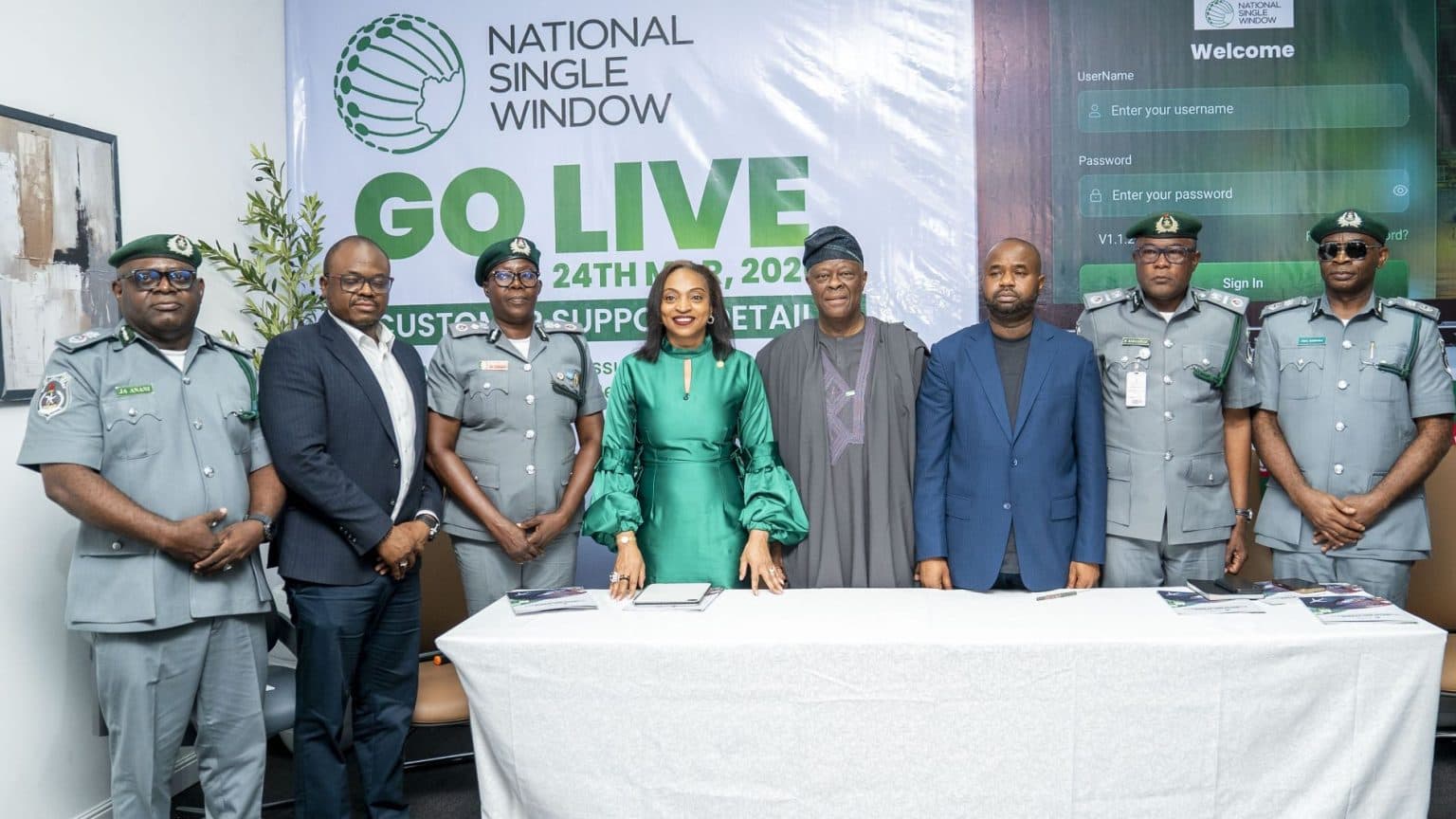
Phased implementation of National Single Window Begins
Preparatory to the March 27 unveiling, relevant agencies involved in the National Single Window (NSW), yesterday, promised that the window would serve as a one-stop shop for trade documentation and payment processing.
The NSW, an ambitious platform that promises to dismantle decades of bureaucratic inefficiency, accelerate trade processes, unlock unprecedented economic potential and harmonise trade processes and payment into a single point of entry, goes live on Friday.
For decades, businesses navigating Nigeria’s import and export ecosystem had grappled with fragmented processes, duplicative documentations and costly delays. The NSW is expected to change the narrative, offering a unified digital platform where traders, government agencies and regulators converge in real-time, creating a seamless, transparent and efficient trade environment.
From this weekend, port users will begin to upload and process their documentation while paying relevant charges on the single portal, which will aggregate the operations of the Nigeria Ports Authority (NPA), Nigerian Maritime Administration and Safety Agency (NIMASA), Nigeria Customs Service (NCS), Nigerian Revenue Service (NRS), Standards Organisation of Nigeria (SON) and others.
The phased implementation will see relevant agencies onboarded on the window for improved trade facilitation, improved revenue collection and lower cost of facility usage. These are expected to make Nigerian ports more competitive as part of efforts to make Nigeria a regional maritime hub.
Speaking at the media launch in Apapa, the Minister of Finance and Coordinating Minister of the Economy, Wale Edun, said the system would eliminate longstanding bottlenecks that required importers to physically engage multiple government agencies for approvals, licenses and permits.
He said under the new regime, traders can submit documentation through a single digital platform accessible via mobile devices or computers.
Edun said previous attempts to address structural distortions in Nigeria’s economy had faltered, but noted that the current administration is demonstrating the political will, capacity and determination required to deliver lasting results.
President Bola Tinubu, during the inauguration of a committee to oversee the implementation of the NSW project in 2024, disclosed that the country is losing $4 billion yearly to bottlenecks at the ports.
He expressed optimism that with the launch of the system in the first quarter of 2026, it would address these issues head-on by preventing revenue leakage, facilitating effective trade and creating a more transparent, secure, and business-friendly environment that will attract investment and spur economic growth.
The President also stated that paperless trade alone is estimated to bring a yearly economic benefit of around $2.7 billion, as countries like Singapore, South Korea, Kenya, and Saudi Arabia have already seen significant improvements in trade efficiency after implementing the Single Window systems.
Also, the Lagos Chamber of Commerce and Industry (LCCI) had last year disclosed that businesses incur a yearly loss of N2.5 trillion due to port inefficiencies, ranging from congestion to infrastructure deficit and lack of automation, which have driven up operational costs and discouraged investments.
Edun noted that the reforms would support domestic industrialisation by easing the importation of machinery and raw materials, while also strengthening Nigeria’s export capacity.
He said small and medium-sized enterprises, as well as large corporations, are expected to benefit from improved trade processes and reduced transaction costs through the NSW.
On measuring impact, the minister indicated that improvements would be reflected in increased trade volumes, faster clearance times, enhanced export performance, and overall growth in government revenues driven by business expansion.
The Minister of Industry, Trade and Investment, Dr Jumoke Oduwole, expressed optimism about the long-awaited initiative, noting that it represents a breakthrough after years of unsuccessful attempts by successive administrations.
Oduwole attributed the current progress to a more deliberate approach adopted by President Bola Tinubu’s administration, including the inauguration of a dedicated committee in April 2024 and the appointment of a leadership team to drive implementation.
The minister highlighted the importance of stakeholder engagement in overcoming initial resistance from both public agencies and private sector operators, who she said were concerned about potential disruptions to mandates and revenue streams.
Oduwole noted that building trust among key institutions, including the Nigeria Revenue Service (NRS) and the Nigeria Customs Service (NCS), was critical to achieving alignment and collaboration.
She revealed that, from day one of the rollout, stakeholders will be able to submit manifests and process payments through a single platform, with the introduction of a risk assessment framework leveraging data analytics and artificial intelligence to profile importers based on compliance history.
The minister projected that the system would deliver significant savings in cost and time for businesses, while also enhancing transparency and boosting government revenue.
The Executive Chairman of the NRS, Zacch Adedeji, clarified that the NSW initiative is fully backed by an approved budget by the Federal Government and is designed to enhance business productivity rather than merely boost revenue collection.
Adedeji explained that funding for the project is already captured within the agency’s appropriation, in line with constitutional requirements, stressing that no public funds are committed outside the national budget approved by the National Assembly.
According to him, the modernisation programme underpinning the project includes significant investments such as software development and infrastructure integration, adding that implementation is proceeding within the framework of what has been duly budgeted for.
Addressing concerns about potential overlaps in revenue collection among government agencies, the NRS boss emphasised that the NSW would not take over the roles of existing institutions.
“We are not taking anybody’s job or revenue. The system allows users to make a single payment, which is then distributed to the relevant agencies,” he said.
On sustainability, the NRS boss disclosed that the project is being institutionalised through legal backing embedded in ongoing tax reforms, ensuring continuity beyond President Bola Tinubu’s administration.
Comptroller General of the Nigeria Customs Service (NCS), Dr Bashir Adeniyi, reaffirmed the agency’s strong commitment to the successful launch of the NSW.
Adeniyi stated that ongoing reforms introduced since the current administration assumed office, including the automation of customs processes, efforts to tackle port congestion and the promotion of policy stability and predictability, are already laying the groundwork for improved trade facilitation.
Adeniyi pledged the agency’s support toward the implementation and long-term sustainability of the platform, stressing that stakeholders across the trade value chain stand to benefit the most from the initiative, including enhancing operational efficiency, accelerating cargo clearance, and reducing bureaucratic bottlenecks, costs, and time of doing business.
He, however, cautioned that minor challenges could arise during the rollout phase, given the scale of the project, while assuring stakeholders that the Service possesses the technical capacity, experience and institutional resolve to address any issues that may emerge.
Drawing from previous technology-driven reforms undertaken by the NCS, Adeniyi expressed confidence that lessons learned would help ensure a smooth implementation process.
The Director of the NSW Project, Tola Fakolade, outlined key performance indicators (KPIs) that will define the success of the platform, with a strong focus on faster approvals, seamless documentation, and system reliability.
Fakolade said that within the first six months, a critical benchmark would be the reduction in the time required by government agencies to approve licenses and permits, adding that service-level agreements (SLAs) have already been established with participating agencies, specifying timelines for approvals.
He said agencies have been engaged to commit to defined timelines and would be held accountable, adding that improved speed in processing approvals would be a central measure of the platform’s effectiveness.
Another major KPI, according to him, is the complete elimination of duplicate documentation in trade processes, noting that stakeholders would submit documents only once, after which they will be digitally shared with all relevant agencies.
Addressing concerns about system downtime and technical glitches, he said the project has put in place redundancy measures, particularly around internet connectivity, highlighting support centres, including one in Apapa, equipped with multiple internet service providers to ensure continuity of operations.
“In cases of internet failure, the system automatically switches to alternative providers. For other technical issues, we have a dedicated team on standby to resolve them promptly,” he assured.
Also speaking, the Deputy Comptroller General of Customs in charge of Information Communication Technology (ICT) and Modernisation, Oluyomi Adebakin, noted that the project builds on existing ICT-driven reforms by the Service, including digital platforms designed to simplify customs procedures and enhance operational efficiency.
“We will see a reduction in turnaround time and even a drop in demurrage costs. Traders themselves will testify to the efficiency when they begin to experience faster release of their goods,” Adebakin stated.
She maintained that adherence to proper documentation and regulatory guidelines would ensure seamless processing and timely cargo delivery under the new regime.
She, however, stressed that compliance by stakeholders remains critical to achieving the desired results, warning against attempts to bypass established procedures.
“Where traders encounter challenges is when they try to circumvent the system. Those who follow due process are already seeing positive outcomes,” she said.
Source: The Guardian